Wednesday, November 23, 2011

Monday, November 21, 2011
Tuesday, November 8, 2011
Tuesday, May 26, 2009
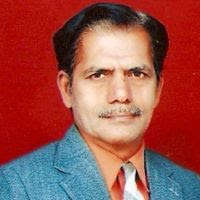
Dr.HAMPA NAGARAJAIAH- Jaina scholar from Karnataka


Scholor from rural background
Dr. Hampa Nagarajaiah,Emiritis professor,is an internationally famed schlor in jainology.Now in his seventy-three(born on 7-10-1936).He has written more than 71 books(more than his own age)Out of these 11 books are in English and the rest are in kannada, his state language.He is popularly known as 'Hampana' in his home state-Karnataka.
Dr. Hampa.Nagarajaiah, lives in Bangalore for the laot 40 years.But he is of village origin.He was born and bred at a village called 'Hampasandra' about 200 k.ms away from Bangalore.Even now he has maintained a strong touch with his village.
CARREER AND ACHIEVEMENTS Dr, Hampa. Nagarajaiah took his early education in his native village, neibhouring towns, and then in Mysore, at the famous Maharaja's college. He finished his post-graduation in kannada litereture in 1959 and soon got appointment as lecturer in kannada. He served in vaious capacities like professor, dean of arts faculty etc, andwas retired in 1996.He is loved by his students even todayand that is his best asset, as he conciders it.
Along with teaching, he took to the habit of authorship, and he hit bounderies and sixers from the very beginning.He was the pioneer writer to write big books in kannada on linguistics and Dravidian linguistics.(at the age of 30).He wrote two novels, literery criticism, essays, books on jainology, so on and so many.
Dr. Hampa. Nagrajaiah, has delivered guest lectures at various universities both in and outside India.He has toure United States and Europe many times as an invited scholor.
His main field of work is -epigraphy , history, textual editing(of old litereture) and temple architecture. All these are mainly related to Jainology.
AWARDS Dr. Hampana has virtually bagged almost all awards meant for scholors in karnataka. Forign schlors have expressed very good opinion on his books in English.
Some of his English books are-
1Later Gangas- Mandali Thousand.
2 History of Rashtrakutas of Malkhed and Jainism
3 Opulant Chandragiri
4 Bahubali-story and Sculpture
5 Manasthamha-Piller of jaina image
6 Jina Parsva temples in karnataka
7 Indra in Jaina iconography, etc
Dr. Hampa.Nagarajaiah, lives in Bangalore for the laot 40 years.But he is of village origin.He was born and bred at a village called 'Hampasandra' about 200 k.ms away from Bangalore.Even now he has maintained a strong touch with his village.
CARREER AND ACHIEVEMENTS Dr, Hampa. Nagarajaiah took his early education in his native village, neibhouring towns, and then in Mysore, at the famous Maharaja's college. He finished his post-graduation in kannada litereture in 1959 and soon got appointment as lecturer in kannada. He served in vaious capacities like professor, dean of arts faculty etc, andwas retired in 1996.He is loved by his students even todayand that is his best asset, as he conciders it.
Along with teaching, he took to the habit of authorship, and he hit bounderies and sixers from the very beginning.He was the pioneer writer to write big books in kannada on linguistics and Dravidian linguistics.(at the age of 30).He wrote two novels, literery criticism, essays, books on jainology, so on and so many.
Dr. Hampa. Nagrajaiah, has delivered guest lectures at various universities both in and outside India.He has toure United States and Europe many times as an invited scholor.
His main field of work is -epigraphy , history, textual editing(of old litereture) and temple architecture. All these are mainly related to Jainology.
AWARDS Dr. Hampana has virtually bagged almost all awards meant for scholors in karnataka. Forign schlors have expressed very good opinion on his books in English.
Some of his English books are-
1Later Gangas- Mandali Thousand.
2 History of Rashtrakutas of Malkhed and Jainism
3 Opulant Chandragiri
4 Bahubali-story and Sculpture
5 Manasthamha-Piller of jaina image
6 Jina Parsva temples in karnataka
7 Indra in Jaina iconography, etc
8 Shruthadevi-The Jaina concept
FAMILY Dr.Hampa. Nagarajaiah is very fortunate on his family side also. He married his six year classmate Kamala in 1961, much against to the will of his parents and religious customs, as she belonged to a lower caste.But, by her schlorship and soft behaviour, she won the love and respect by all family members in her husband's family and commands a greater love even now.HErself being an eminent writer and orater, she has served in the teaching post for 38 years. This couple have 3 children all well settled in life, eldest son being an eminent architect in Bangalore. Prof .Hampana could be conatcterd at- hampana@yahoo,com
also see:
http://hubpages.com/_o85hhbz9dfvv/hub/_Dr_Kamala_Hampana-Eminent__lady_writer_fron_Karnataka
FAMILY Dr.Hampa. Nagarajaiah is very fortunate on his family side also. He married his six year classmate Kamala in 1961, much against to the will of his parents and religious customs, as she belonged to a lower caste.But, by her schlorship and soft behaviour, she won the love and respect by all family members in her husband's family and commands a greater love even now.HErself being an eminent writer and orater, she has served in the teaching post for 38 years. This couple have 3 children all well settled in life, eldest son being an eminent architect in Bangalore. Prof .Hampana could be conatcterd at- hampana@yahoo,com
also see:
http://hubpages.com/_o85hhbz9dfvv/hub/_Dr_Kamala_Hampana-Eminent__lady_writer_fron_Karnataka
Details of photoes:
clockwise from left- Dr.Hampa. Nagarajaih, and his wife, on their wedding day-45 years ago.
The literetteur couple now- in the ripen age.
The renowned professer
Wednesday, May 20, 2009
The Fascinating Delhi


The Fascinating Delhi-Delhi is one of the glorious cities in the world.She is attractive, charming and Historious!
Delhi is the capital city of India, spread on e ither sides of river Jamuna or Yamuna. The city is popularly divided into two parts-old Delhi and New Delhi. While old Delhi has many historical remains ike Red Fort,etc, New Delhi has many important and wonderful constructions like-the parliment house, Rashtrapathi Bhavan, supreme court, Humayun's tomb,Feroz-Shah Kotla, etc.
AreaTotal land area od DElhi is about 1500 sq.k.ms.It is situated in the latitude of 28.36 north and 77.13 east.
CLIMATE:Climate of Delhi is best for visitors in October. European visitors find it leasent even in winter season i.e. Nov. to Feb end. From March to May end, it is summer and all may feel it sweating.
Delhi is the capital city of India, spread on e ither sides of river Jamuna or Yamuna. The city is popularly divided into two parts-old Delhi and New Delhi. While old Delhi has many historical remains ike Red Fort,etc, New Delhi has many important and wonderful constructions like-the parliment house, Rashtrapathi Bhavan, supreme court, Humayun's tomb,Feroz-Shah Kotla, etc.
AreaTotal land area od DElhi is about 1500 sq.k.ms.It is situated in the latitude of 28.36 north and 77.13 east.
CLIMATE:Climate of Delhi is best for visitors in October. European visitors find it leasent even in winter season i.e. Nov. to Feb end. From March to May end, it is summer and all may feel it sweating.
Visiting spots:Spots to be visited by tourists in Delhi are the following:
Red-fort, Qutub Minar, Shanthi-sthal, Raj-Ghat,and tombs of other deceased prime-ministers in the neighbouring area, Teen-Murti Bhavan, parliment house, National museum, Lotus temple or Bahai Temple, Akshara-dham temple, Corol-Bagh shopping area, Toy-museum, Jantar-mantar,Rashtrapathi Bhavan, etc.
Red Fort
Red-fort, Qutub Minar, Shanthi-sthal, Raj-Ghat,and tombs of other deceased prime-ministers in the neighbouring area, Teen-Murti Bhavan, parliment house, National museum, Lotus temple or Bahai Temple, Akshara-dham temple, Corol-Bagh shopping area, Toy-museum, Jantar-mantar,Rashtrapathi Bhavan, etc.
Red Fort
It is built alongside rever Yamuna(Jamuna)The fort wall is about 2.4 K.Ms in circumference.Built in red sandstone, it is one of the finest forts in India. It was built by Mughal emperer Shahajahan(who built Taj Mahal) in 17th century.
The fort has a public meeting bhall, palaces, Masjid,etc. By evening 6,0clock there will be sound and light show in which the history of Delhi, and India will be attractively narrated by using clourful lightsand recorded narration.
Infront of this is Famous marketstreet called 'Chandini Chowk' or 'Silver Street'.
Qutub MinarIt is one of the most wonderful archeological structures in India.It is a 92.5 metre high stone piller, conical in shape . Its construction was started in 1193, but took many years to complete.For its construction, many neibhouring Hindu and Jain temples were destroyed.Qutub-ud-din started its construction.It's tip has a daimetre of 14.4 metres.It has steps to climb up. But now a days nobody is allowed to go up,for security reasons.
Near this ,is the famous iron piller of 4th century, still not caught rust.
Parliment HouseIndian parliment house is a magnificient, elegent piece of modern architecture.Designed by British architect -Leutyens.Construction was completed in 1926.It is in new-Delhi area. Special permission is required to enter inside.It is a circular building.Has three halls inside. It has a central dome. Circumference of the building is about one kilometer.
India Gate and Rashtrapathi BhavanThese are the constructions erected near the parliment house . The whole area is a wide open ground called Boat Club.
India gate is a memorial dedicated to the martyers of world war -ii.It is a four pillered arch with a ever-litting flame inside it. This is also designed by Lutyens.It is 42mts(137 ft) high.The boat club lawn is a very popular time spending place for Delhi local people.On January 26, Republic day parade passes through the Road (called -Rajpath) in this boat club.
Rashtrapathi Bhavan or 'President's house' is the official residence and office of the president of India.It has the total area of 330 acres( about 500 hectares), perhaps largest royal house in the world. It has 340 rooms, apart from celebration halls, etc It has beautiful Mughal style gardens around it. In certain months, specially in january, these gardens are open for public. But to visit the buildig, special permission is necessery.This was designed and built by british Viceroys for thier residence. After independence, it became president's house..
Aksharadham Temple
It is newly built exquisite Hindu temple. It is on the banks of river Yamuna, near Nizamuddin bridge.It took day and night work for five years. It is a blend of traditional and modern Indian art and architecture.It is built in the area of about 100 acres,i.e.40 hectares.It is built at the
The fort has a public meeting bhall, palaces, Masjid,etc. By evening 6,0clock there will be sound and light show in which the history of Delhi, and India will be attractively narrated by using clourful lightsand recorded narration.
Infront of this is Famous marketstreet called 'Chandini Chowk' or 'Silver Street'.
Qutub MinarIt is one of the most wonderful archeological structures in India.It is a 92.5 metre high stone piller, conical in shape . Its construction was started in 1193, but took many years to complete.For its construction, many neibhouring Hindu and Jain temples were destroyed.Qutub-ud-din started its construction.It's tip has a daimetre of 14.4 metres.It has steps to climb up. But now a days nobody is allowed to go up,for security reasons.
Near this ,is the famous iron piller of 4th century, still not caught rust.
Parliment HouseIndian parliment house is a magnificient, elegent piece of modern architecture.Designed by British architect -Leutyens.Construction was completed in 1926.It is in new-Delhi area. Special permission is required to enter inside.It is a circular building.Has three halls inside. It has a central dome. Circumference of the building is about one kilometer.
India Gate and Rashtrapathi BhavanThese are the constructions erected near the parliment house . The whole area is a wide open ground called Boat Club.
India gate is a memorial dedicated to the martyers of world war -ii.It is a four pillered arch with a ever-litting flame inside it. This is also designed by Lutyens.It is 42mts(137 ft) high.The boat club lawn is a very popular time spending place for Delhi local people.On January 26, Republic day parade passes through the Road (called -Rajpath) in this boat club.
Rashtrapathi Bhavan or 'President's house' is the official residence and office of the president of India.It has the total area of 330 acres( about 500 hectares), perhaps largest royal house in the world. It has 340 rooms, apart from celebration halls, etc It has beautiful Mughal style gardens around it. In certain months, specially in january, these gardens are open for public. But to visit the buildig, special permission is necessery.This was designed and built by british Viceroys for thier residence. After independence, it became president's house..
Aksharadham Temple
It is newly built exquisite Hindu temple. It is on the banks of river Yamuna, near Nizamuddin bridge.It took day and night work for five years. It is a blend of traditional and modern Indian art and architecture.It is built in the area of about 100 acres,i.e.40 hectares.It is built at the
expense of Rs.200 crores.You will enter the temple through peacock enterence.Main temple is 141ft. high,136 ft wide and 370 feet high.Exquisite design work in the temple keeps you spell bound.This is built by the deciples of Swami Narayan who was a famous saint of recent days. It has 234 pillers with ashtonishing carving.But the circumambulatory path of the temple has 1160 pillers.
This temple has an enterence fee of Rs.125 per head.For senior citizens and children it is only Rs.75/-.
This temple has an enterence fee of Rs.125 per head.For senior citizens and children it is only Rs.75/-.
Sunday, May 17, 2009
Indian jewels-Beautiful and artistic


India- home of artistic jewelleries.
MEN AND WOMEN throughout ages,have thrived to decorate themselves in so many ways.As a result of this,jewelleries were vreated.India has been one of the countries topped in creation of jewelleries in topmost fashions.This country did countless experiments in developing various types of jewels.This article tries to a glimpse of some jewels used by Indians even now.
Necklaces
Necklaces
The above photograph shows a necklace.In the hollow of the necklace are seen two ornaments used to wear in the ears.At the bottom are finger rings.The design of all these matches one another. So they make a set. Riches prefer to order for jewels in such sets.
Some more such sets are shown here
RINGS -different typesRings are of different types-ear rings, nose rings, toe rings,finger rings, etc.Nose rings give extra look tothe face. It has become further famous now because Sania Mirza, famous tennis star, wears it.Nos rings are also of various types.Some more such sets are shown here
Ear ringsEar rings are easy to maintain.They usually do not have any precious stones embedded.Formerly only unmarried girls used to wear them. But now even married ladies wear them as they are more convenient to maintain.Some types of ear rings have dropping chains of 2-3 cmslength.
Finger ringsThese are most widely used rings. They are worn both by men and women.Except thumb and small finger, they are worn on all fingers.These rings are of thousands of different varieties- with and without precious stones embedded in them.Precious stonesThe different types of precious stones used in jewellery are-pearls, red corals, emerald, ruby, diamond,r4ed stones, blue stones, etc.Artificial pearls and American diamonds are also used by not so rich customers.In case of nose rings, diamond is most preferred stone
America-great customer for diamondsIn India, Surat, a prominent city in Gujarat state is famous for cutting diamonds technically and give them good shape. Interestingly, U.S.A. purchases most of the diamonds produced in India
India- How much gold?It is interesting to note that India uses about 800 tonnes of gold every year.Large oart of it imported!Who says India is a poor country?
EtymologyFor the origin and evolution of the word jewel/jewels, you may please refer the following source: .www.websters-online-dictionary.org/je/jewels.html
Mr. K. Vasudevachar, leading jeweller at Shimoga-a city in karnataka, south India, is much experienced in producing various jewels showh here.His firm bears the name-'Harnahalli K.Manjappa &Sons'.The author is much indebted to him for providing some of the pictures shown here.
Saturday, May 16, 2009
Beautiful Indian Ladies-Cultural outlook


Beauty- A divine asset.Really, beauty is a god given gift. It is heart-chasing, lovely, natural and artistic. One who sees beauty with a decent attitude, enjoys it and spreads the message of 'Eternal beauty' to the world.
Keats exclaimed in his famous ode-'TRUTH IS BEAUTY AND BEAUTY IS TRUTH.tHAT'S ALL YE KNOW, AND YE NEEDS TO KNOW'
INDIAN WOMENiT IS TRUE that modern posh life and western style of living has made Indian women to sheddown their traditional outlook to some extent. Their dressing system has changed.They moveout more than earliier days, etc. Some modern girls have drinking and smoking habits also.But the percentage of such women is still very very less.-not even 1% of the total women percentage in india.Majority of our ladies are still god-fearing ,kind hearted, and like to have sex with their life partner only.Family life is still a major concern for Indian women.By these characteristics, their beauty has increased,as it brings a cultural look.
Facial features
Majority of indian ladies have one of the following type of facial shape1 Round face2 Triangular face3 Square shape. The last one is seen in less number of cases when compared to other two. The most attractive part in a person is his/her nose.The beautiful Indian women have finely shaped nose,either triangular, or small.The smooth tip makes it appear nicer.The eyes will be largely black, conciderable percentage of brown eyes are also seen. But blue eyes are very very rare in indian women.
The DressSaree is most suited dress for traditional Indian women. But churidar is also equally respected and preferred outfit.Skirts are not usually worn by majority of married indian women, though it is not a bar.
Jeans and ShirtsYes, that too is seen on Indian ladies now a days. But it is niot yet a village level dress. it is used , to a large extent, by educated ladies, or college students, living in cities and big towns.
Wearing a loose top-like jubba(shirt) is now on the way of getting accepted as a honourable outfit.In Big cities and metropolis, grown up ladies also wear jeans and tight shirts, which gives a sexy look. it can not be denied now that younger generation if indian women, to some extent, are developing a leaning towords sexy dresses. on the influence of western trends.
Beauty and dressIt is a known fact that dress , properly worn, enhances the beauty of a [person. So, Indian ladies have taken care of dressing in their own way, for a long time. In olden timen times, even in Ashrams of saints, it is said that ladies used to decorate themselves, with flowers.Eventoday, flower wearing is perhaps a unique love for Indian ladies.Saree- is the unique outfit of indian ladies, since thousands of years.
Beauty in goddessesIndian culture has seen its gods and goddesses also as beautiful indivisuals. Lakshmi (goddess of wealth), Saraswathi( goddess of knowledge and learning), Parvathi( wife of Lord Shiva), are all beautiful. Prayer verses praising there beauty are being sung from thousands of years. It is said, there beauty is the symbol of their bounty.
Sathyam, Shivam, SundaramIndian culture has considered beauty as the expression of Godliness. ‘That is beautiful, which is favorable to all’-so says a Samskrit hymn.The actual meaning of the word ‘Shivam’ is-favorable.So the beauty is that- which does good to all. Otherwise, even though the features, color, etc are good, but person has bad intentions, it is not beauty.
Keats exclaimed in his famous ode-'TRUTH IS BEAUTY AND BEAUTY IS TRUTH.tHAT'S ALL YE KNOW, AND YE NEEDS TO KNOW'
INDIAN WOMENiT IS TRUE that modern posh life and western style of living has made Indian women to sheddown their traditional outlook to some extent. Their dressing system has changed.They moveout more than earliier days, etc. Some modern girls have drinking and smoking habits also.But the percentage of such women is still very very less.-not even 1% of the total women percentage in india.Majority of our ladies are still god-fearing ,kind hearted, and like to have sex with their life partner only.Family life is still a major concern for Indian women.By these characteristics, their beauty has increased,as it brings a cultural look.
Facial features
Majority of indian ladies have one of the following type of facial shape1 Round face2 Triangular face3 Square shape. The last one is seen in less number of cases when compared to other two. The most attractive part in a person is his/her nose.The beautiful Indian women have finely shaped nose,either triangular, or small.The smooth tip makes it appear nicer.The eyes will be largely black, conciderable percentage of brown eyes are also seen. But blue eyes are very very rare in indian women.
The DressSaree is most suited dress for traditional Indian women. But churidar is also equally respected and preferred outfit.Skirts are not usually worn by majority of married indian women, though it is not a bar.
Jeans and ShirtsYes, that too is seen on Indian ladies now a days. But it is niot yet a village level dress. it is used , to a large extent, by educated ladies, or college students, living in cities and big towns.
Wearing a loose top-like jubba(shirt) is now on the way of getting accepted as a honourable outfit.In Big cities and metropolis, grown up ladies also wear jeans and tight shirts, which gives a sexy look. it can not be denied now that younger generation if indian women, to some extent, are developing a leaning towords sexy dresses. on the influence of western trends.
Beauty and dressIt is a known fact that dress , properly worn, enhances the beauty of a [person. So, Indian ladies have taken care of dressing in their own way, for a long time. In olden timen times, even in Ashrams of saints, it is said that ladies used to decorate themselves, with flowers.Eventoday, flower wearing is perhaps a unique love for Indian ladies.Saree- is the unique outfit of indian ladies, since thousands of years.
Beauty in goddessesIndian culture has seen its gods and goddesses also as beautiful indivisuals. Lakshmi (goddess of wealth), Saraswathi( goddess of knowledge and learning), Parvathi( wife of Lord Shiva), are all beautiful. Prayer verses praising there beauty are being sung from thousands of years. It is said, there beauty is the symbol of their bounty.
Sathyam, Shivam, SundaramIndian culture has considered beauty as the expression of Godliness. ‘That is beautiful, which is favorable to all’-so says a Samskrit hymn.The actual meaning of the word ‘Shivam’ is-favorable.So the beauty is that- which does good to all. Otherwise, even though the features, color, etc are good, but person has bad intentions, it is not beauty.
Subscribe to:
Posts (Atom)

 Posts
Posts

